
As an instructor at OCAD University, I teach courses on the scientific, cultural and social dimensions of mental health, as well as creative economics.
Across my teaching, I work with students to unpack their own learning goals and aspirations by focusing on the interconnected, applicable, situated, and practical nature of course materials and concepts. My pedagogy facilitates a what I call a “deep learning” approach centred on: (1) direct student engagement; (2) socially grounded projects; (3) collaborative strategies.
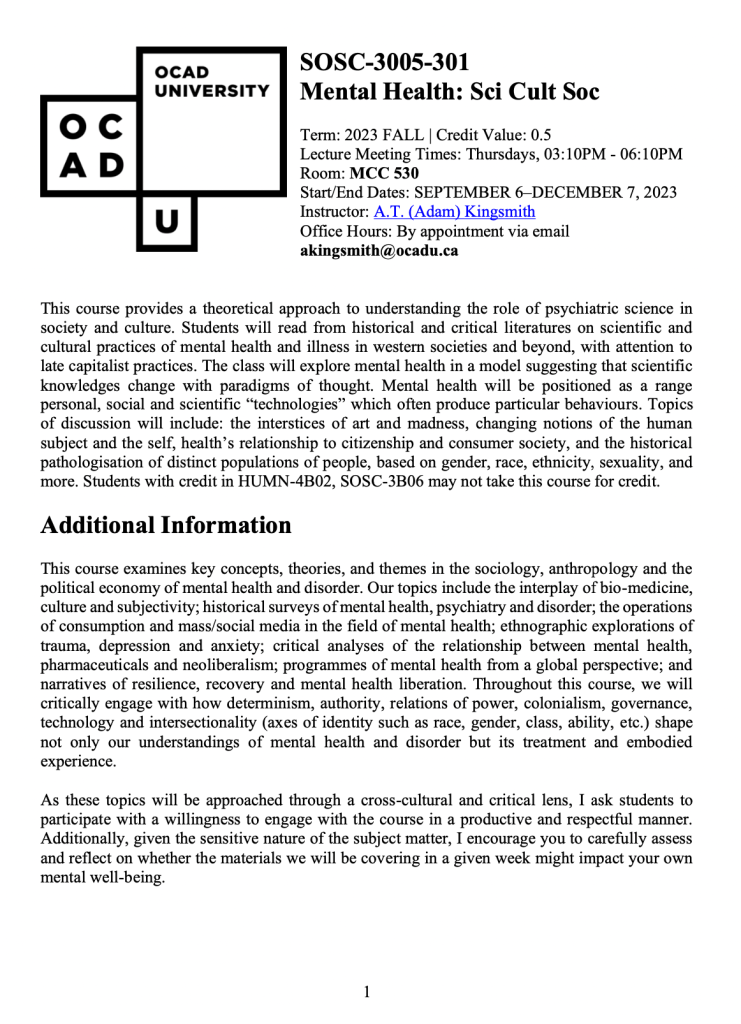
SOSC-3005 provides a theoretical approach to understanding the role of psychiatric science in society and culture. Students will read from historical and critical literatures on scientific and cultural practices of mental health and illness in western societies and beyond, with attention to late capitalist practices. The class will explore mental health in a model suggesting that scientific knowledges change with paradigms of thought.
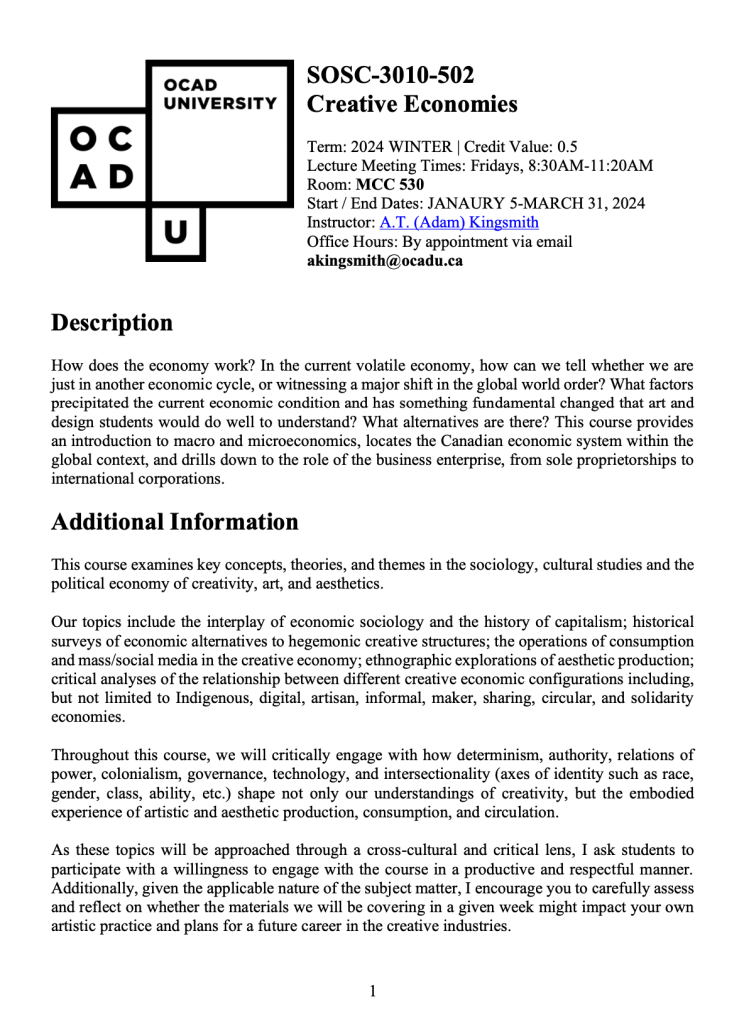
SOSC-3010 examines key concepts, theories, and themes in the sociology, cultural studies and the political economy of creativity, art, aesthetics, and creative production and technologies. Our topics centre around a critical analysis of the changing relationship between different creative economic configurations including, but not limited to Indigenous, digital, artisan, informal, maker, sharing, circular, and solidarity economies.
Humber College
Institute of Technology and Advanced Learning
Partial Load Professor
Faculty of Social and Community Services
2021-present
As a partial-load professor at Humber College, I have had the opportunity to develop and teach a breadth of courses across the faculty.
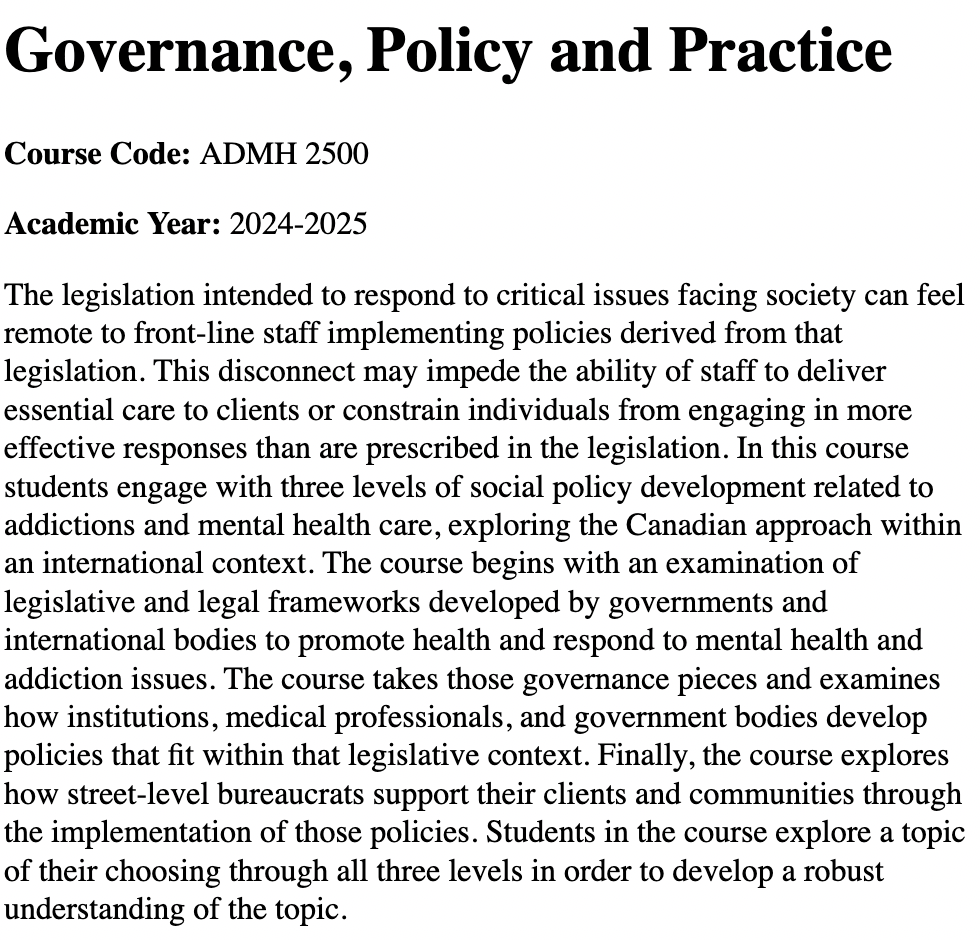
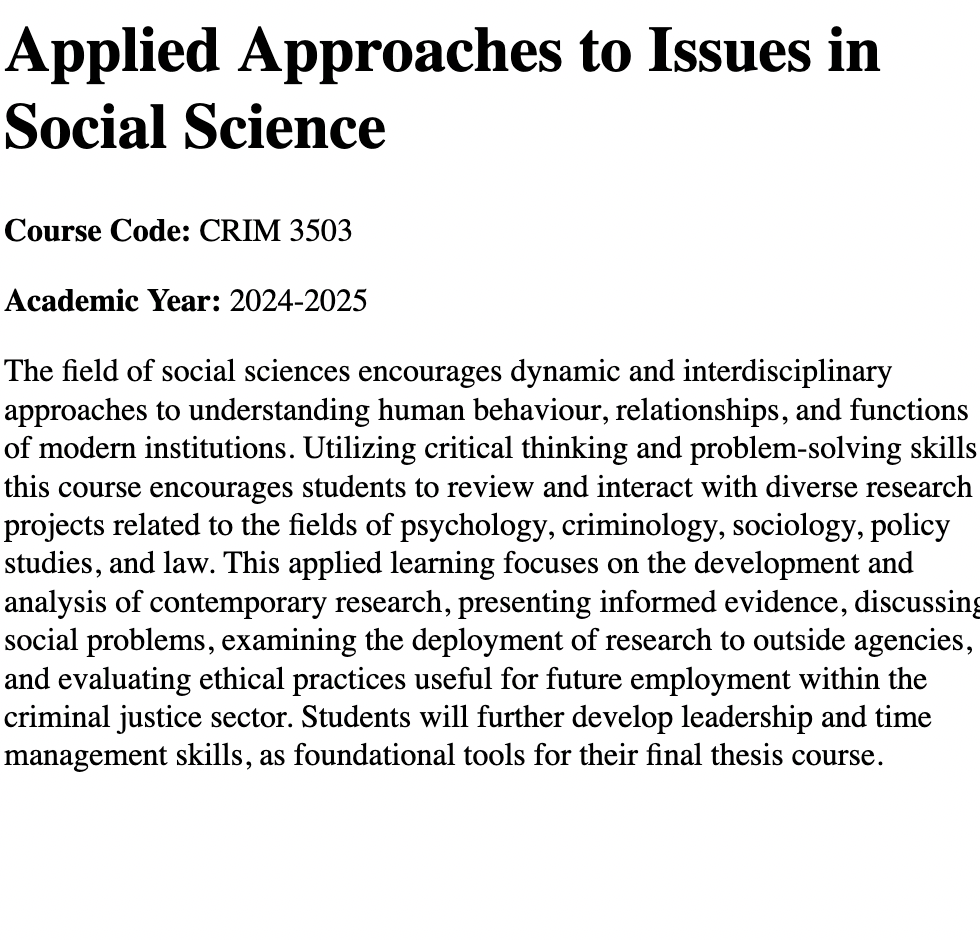
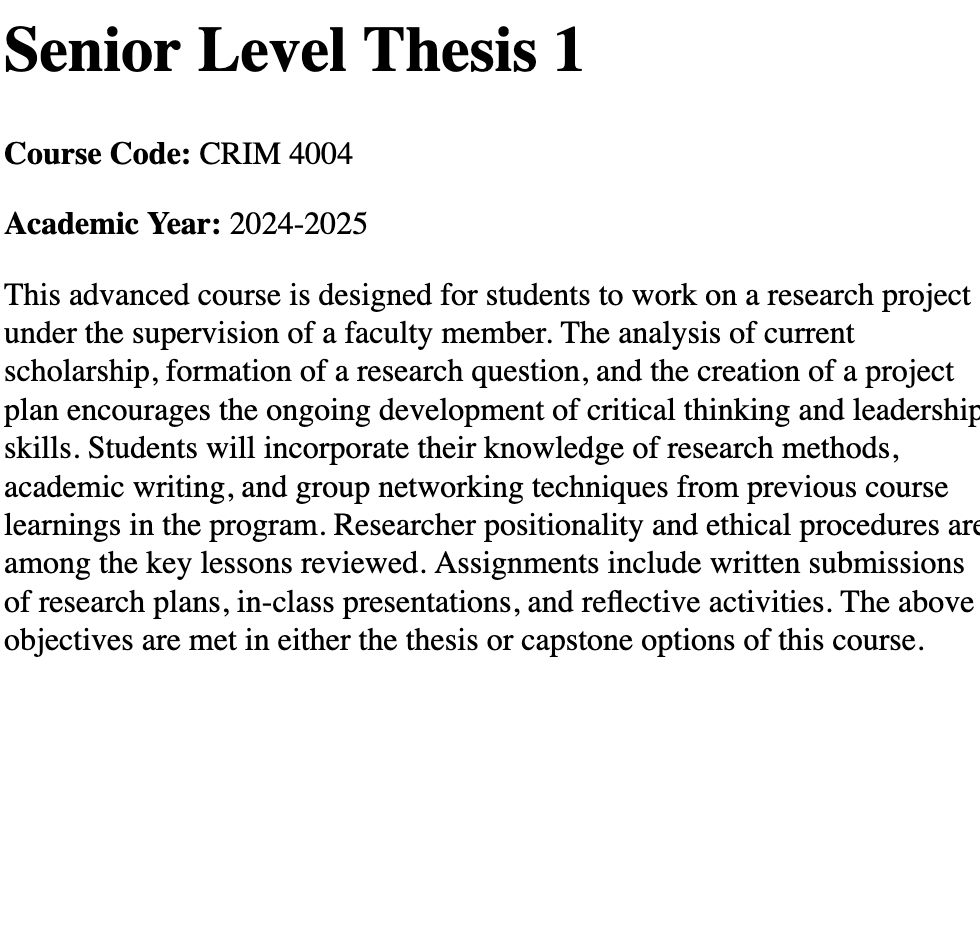
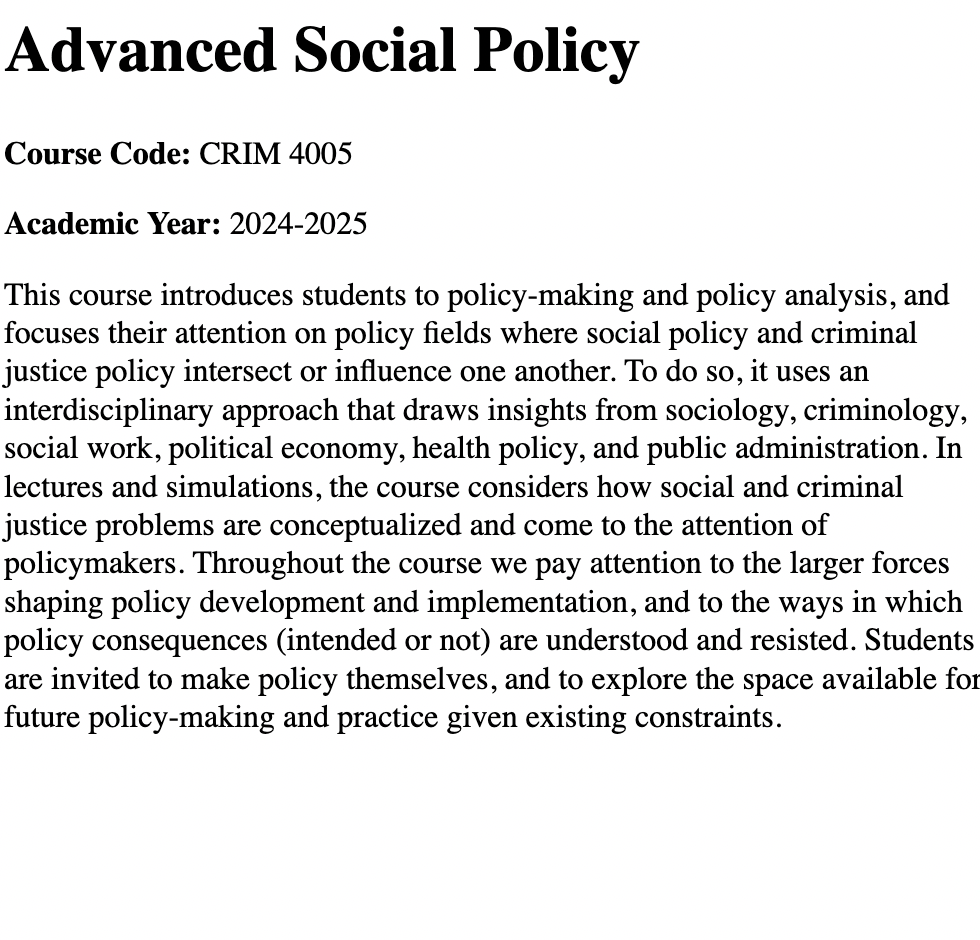
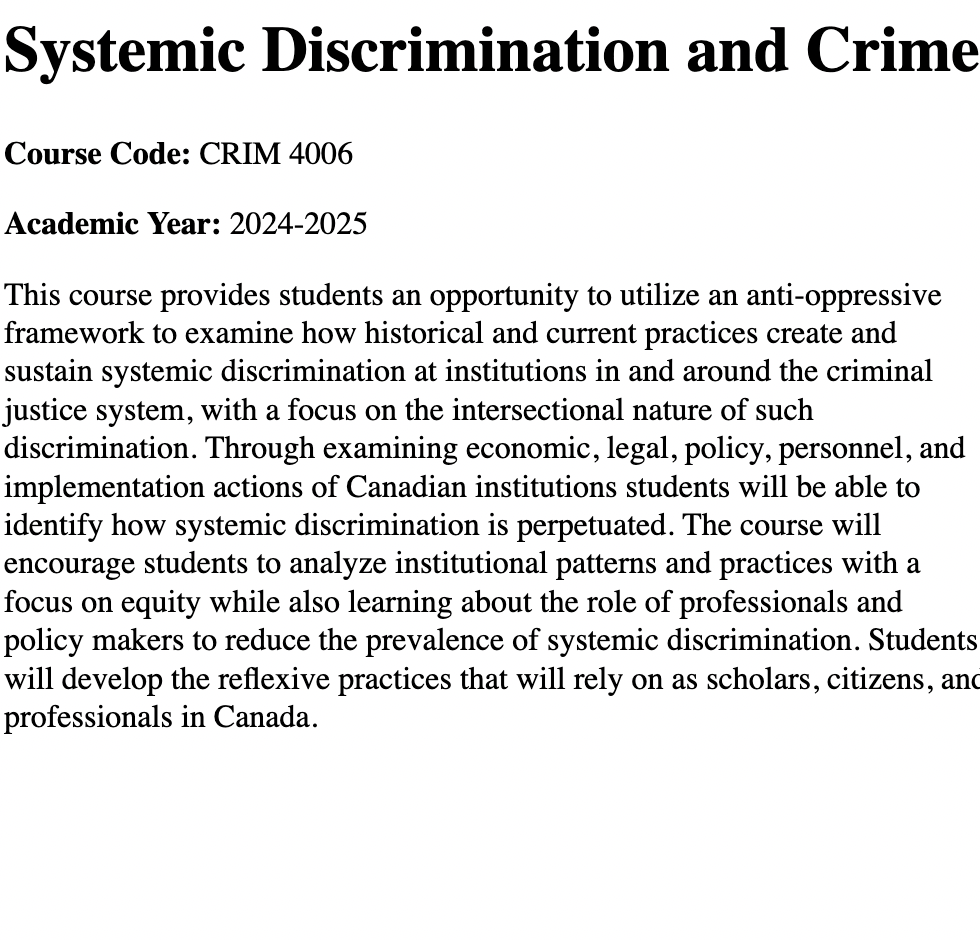
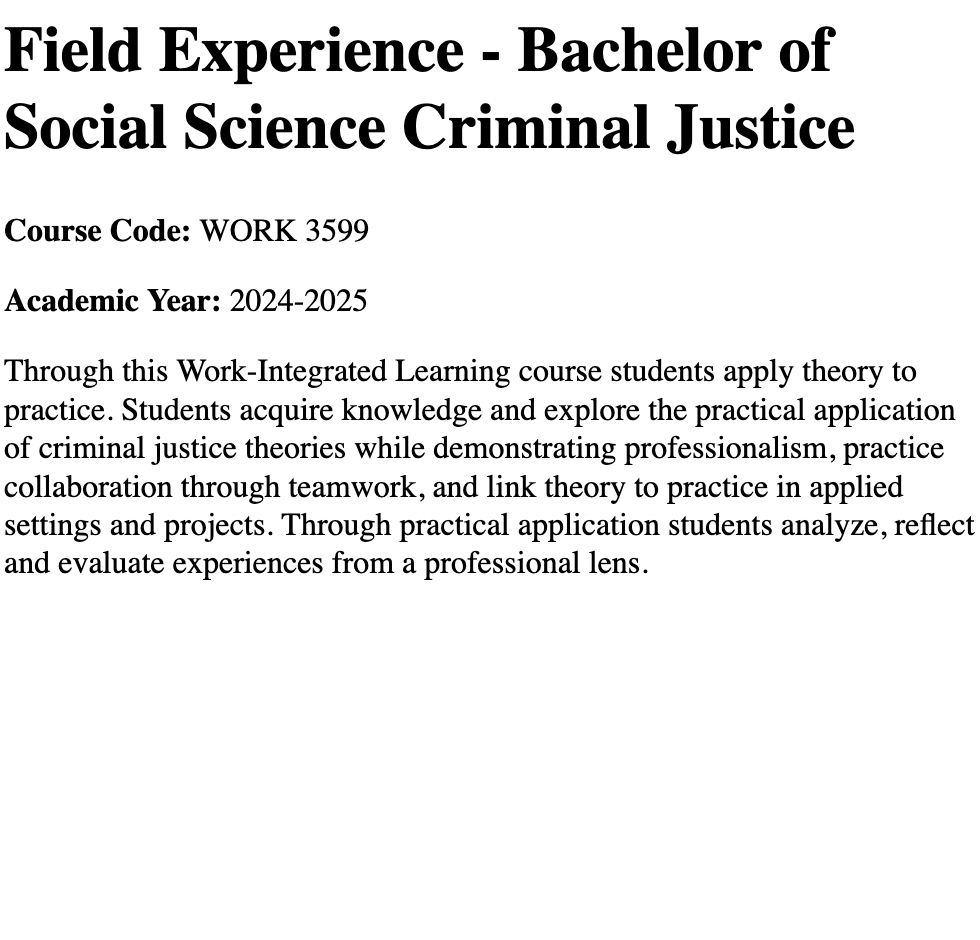
The syllabi listed below showcase these experiences, which have ranged from supervising thesis projects in 8-month research periods involving primary data collection, research ethics, analysis, and interpretation to managing the work field experiences. I redesigned research methods (CRIM 3503) and mental health policy courses (ADMH 2500), while achieving first-rate teaching evaluations in everything from second and third year introductory lectures to upper year seminar courses.



 A.T. Kingsmith, Ph.D.